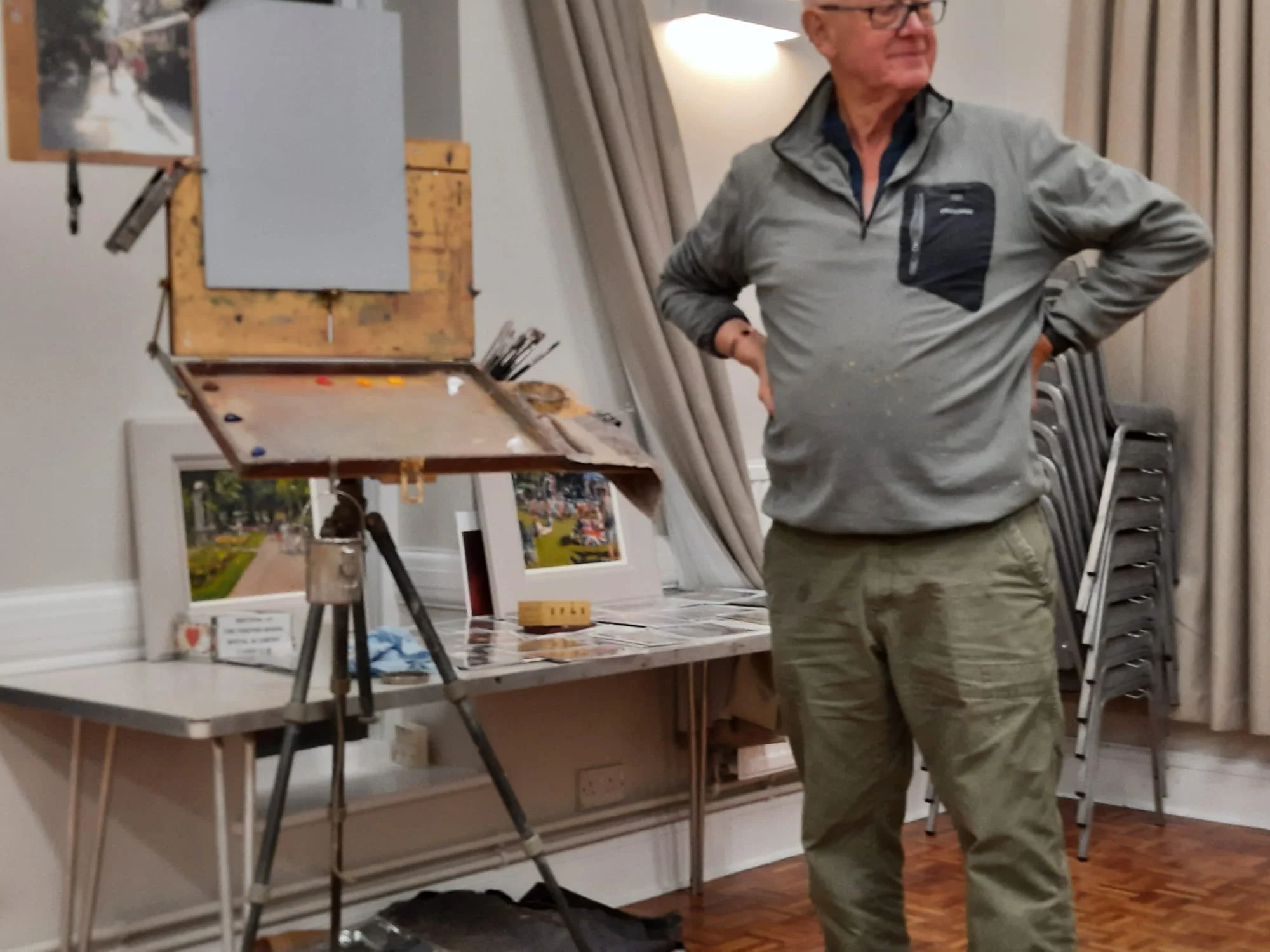
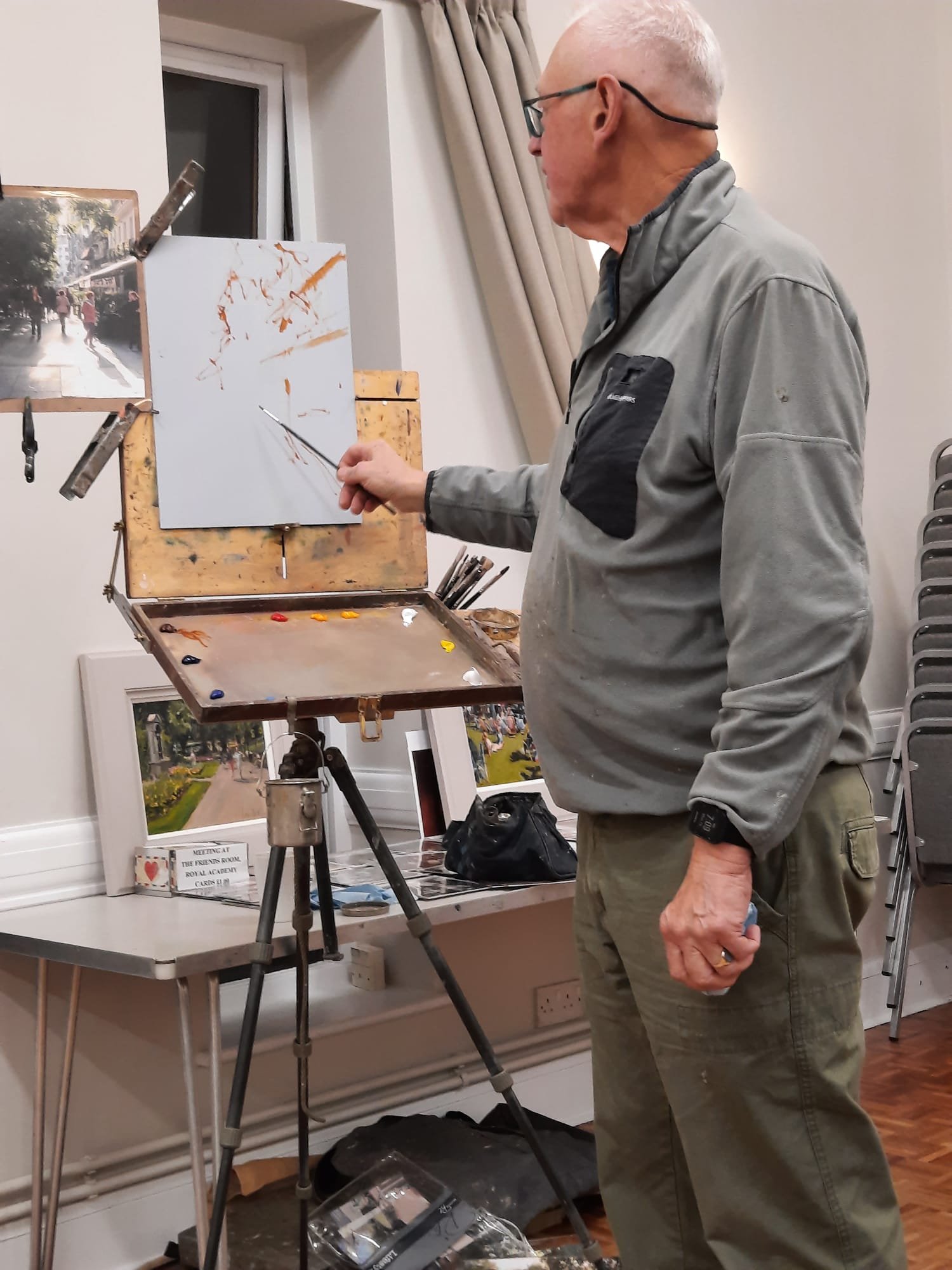
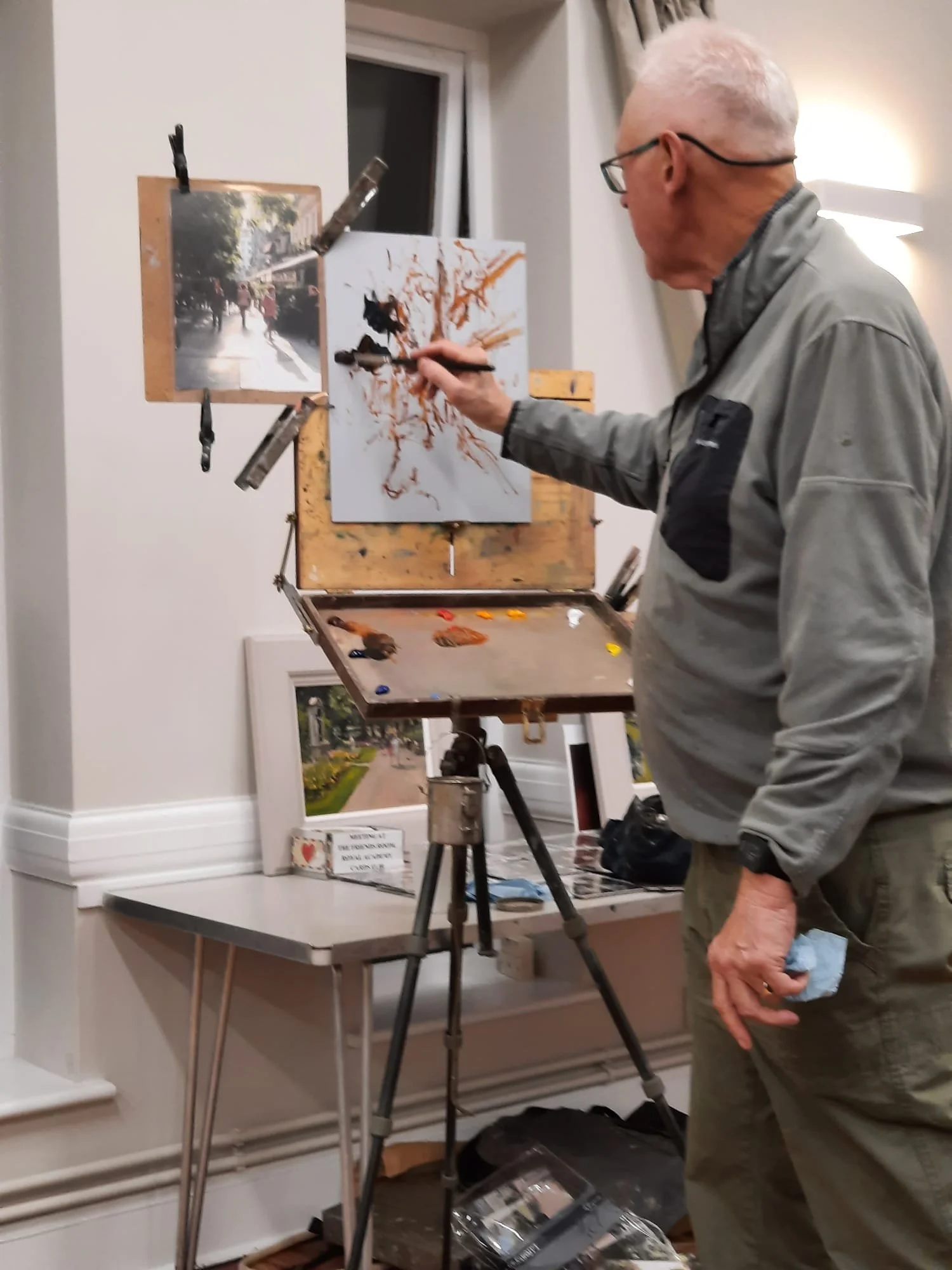
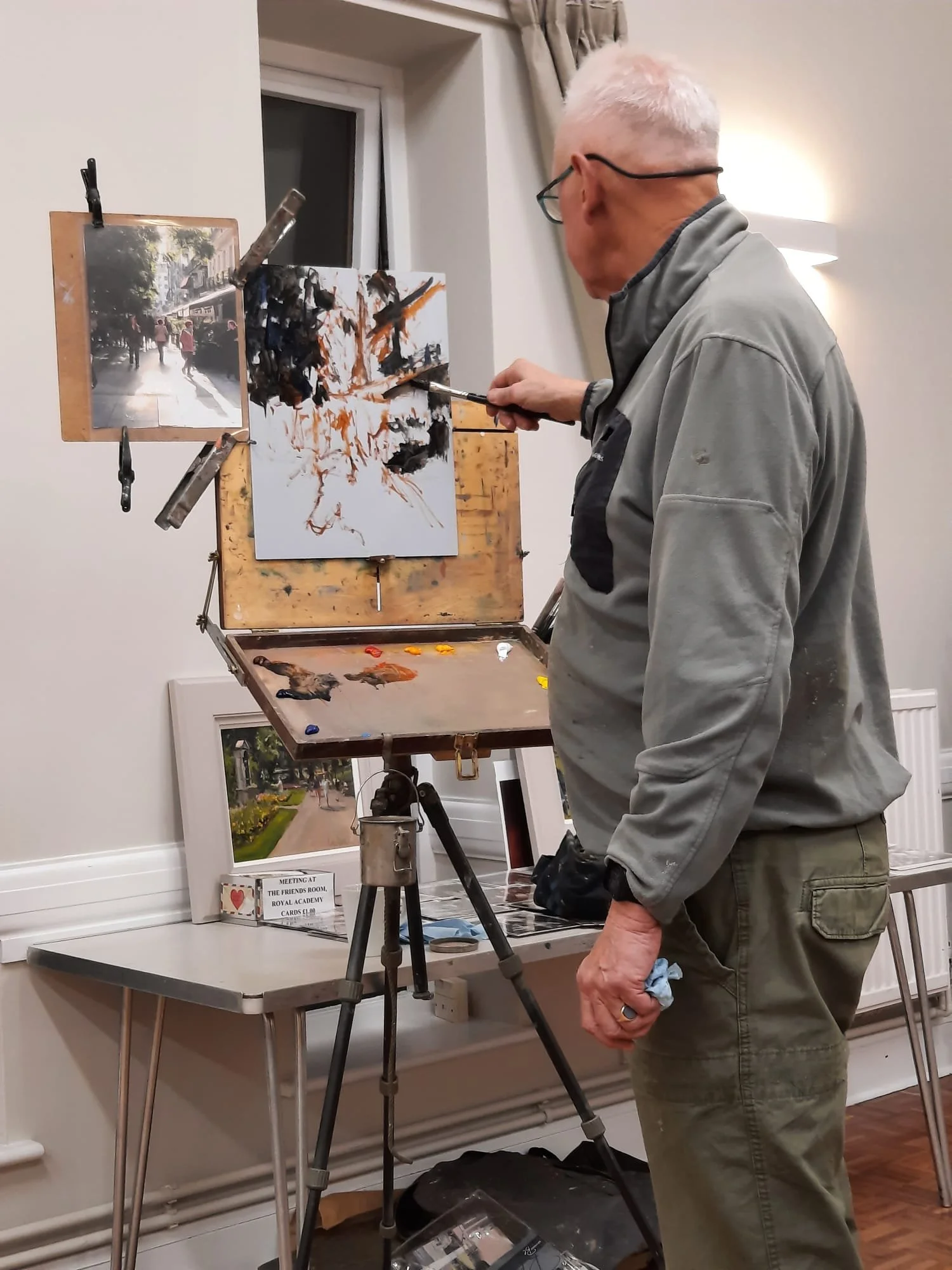
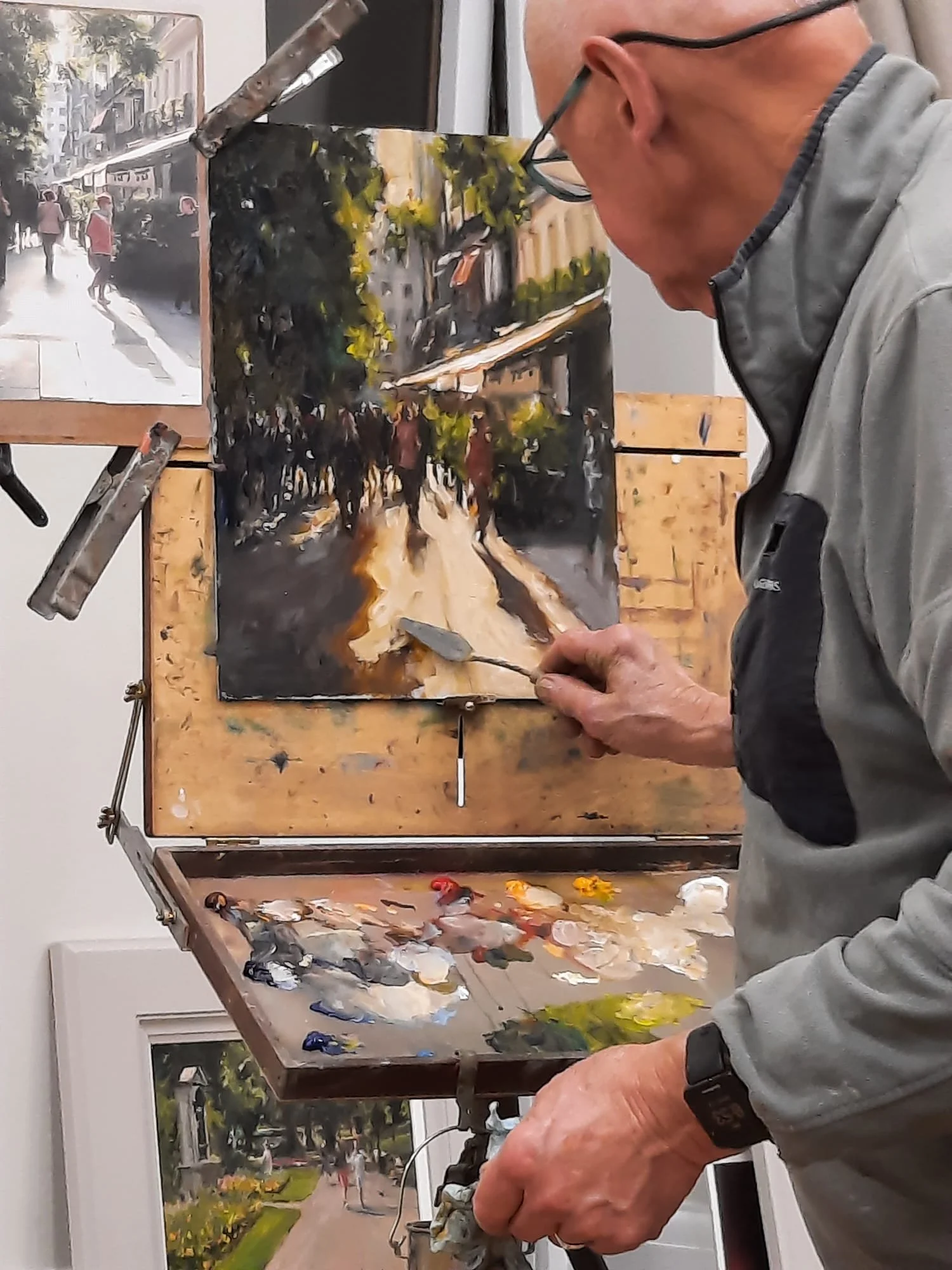
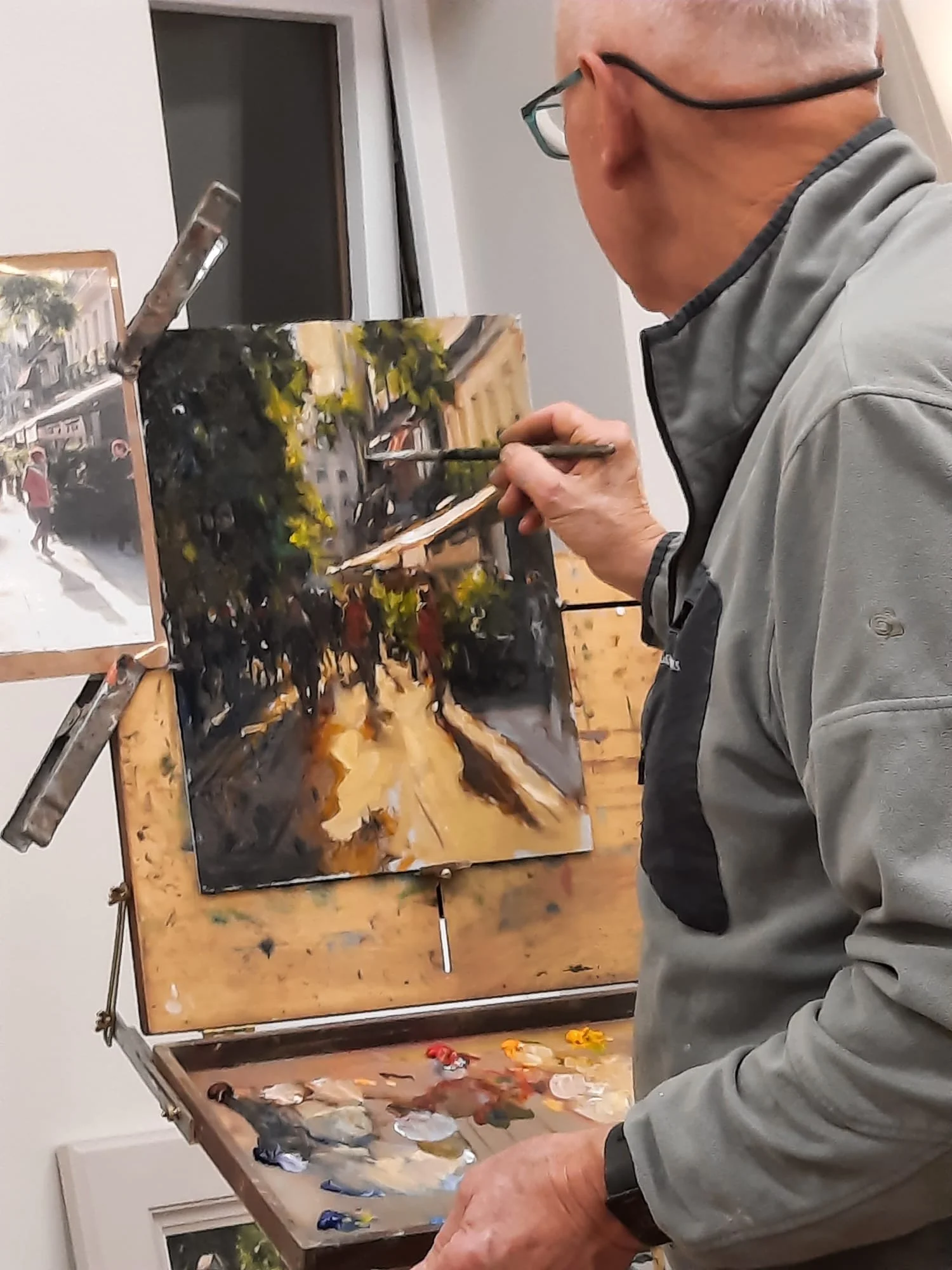
As always, an excellent, highly entertaining demo from Roger.
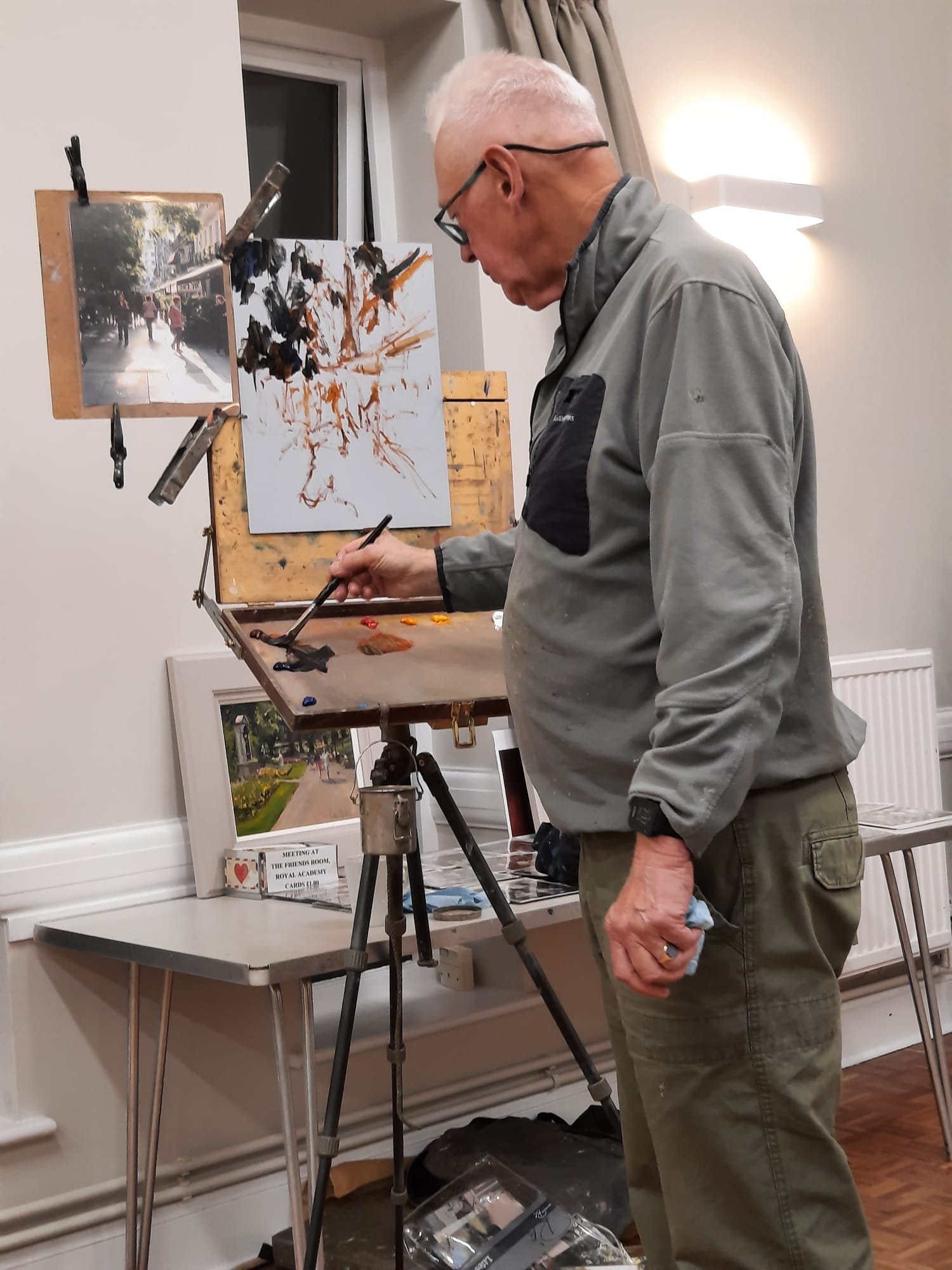
We voted on the scene Roger would demonstrate for us. He explained we had chosen a scene outside a cafe in a busy area of Madrid. There was good light casting strong shadows, tall traditional buildings and some trees to one side.
He painted on 2.5 hardboard with 3 coats of gesso, and Paynes Grey on the top layer to give a base mid tone which allowed easier judgement of darks and lights.
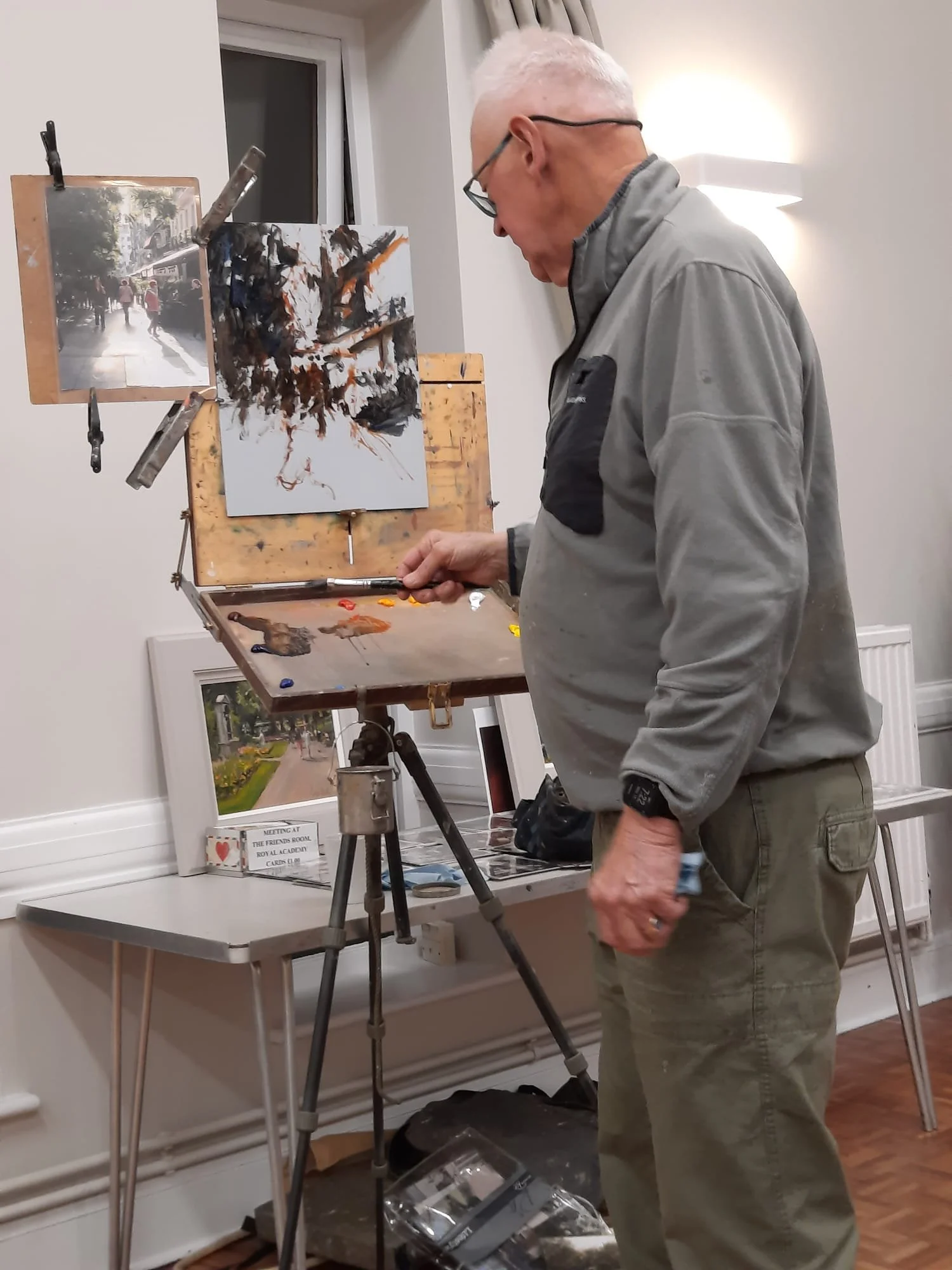
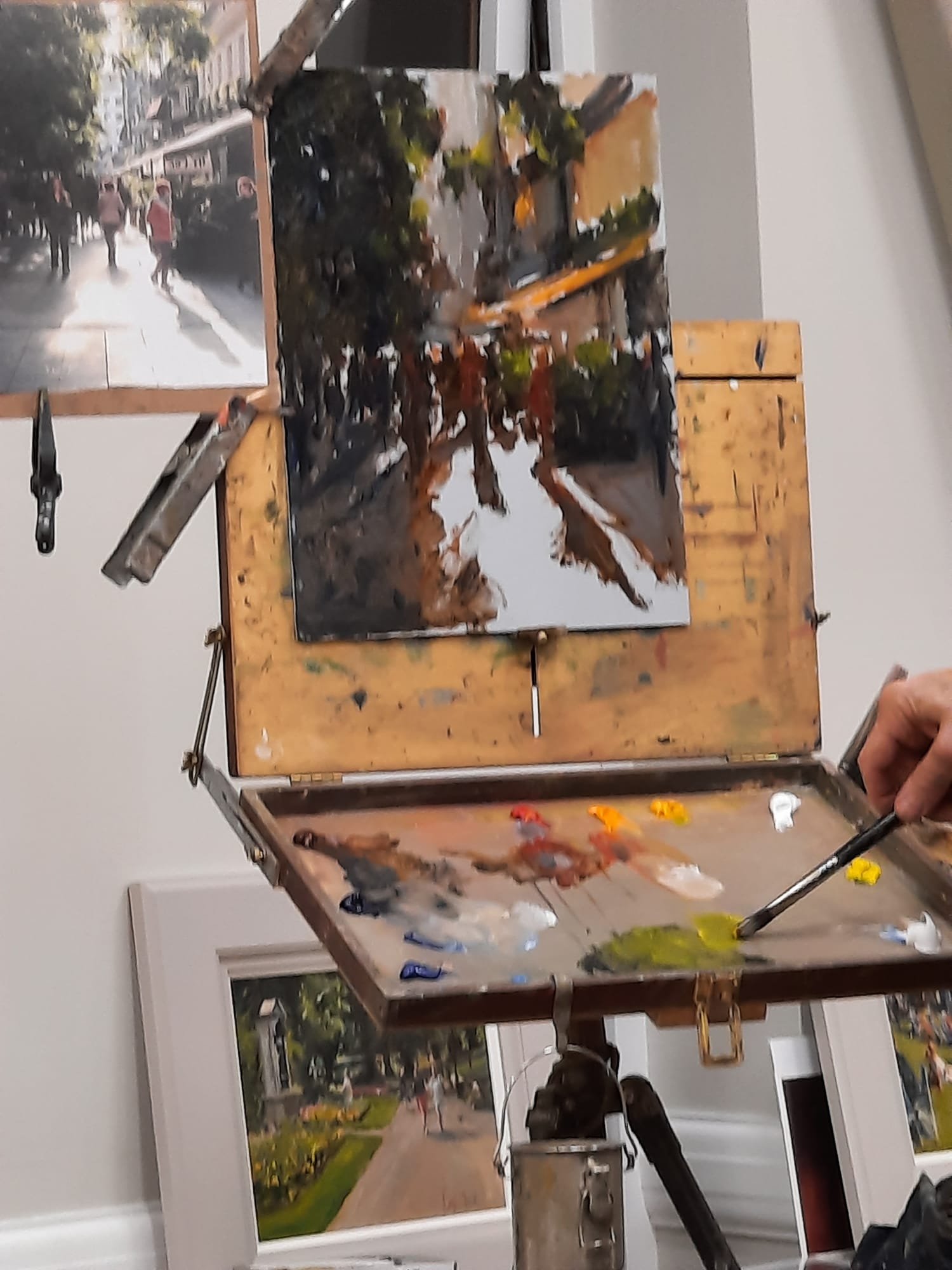
His palette included the following: Windsor and Newton colours: cadmium yellow pale, burnt Sienna, cadmium red deep, ultramarine, cerulean, cobalt blue and two separate pools of white, one for mixing and one to stay clean for painting. He used a self-mixed medium of equal parts linseed oil, Damar varnish and Zestit solvent. He explained that on the whole, dark colours in the initial layers should be thin and flat, while the lighter colours in the upper layers of the painting were best thick and shiny.
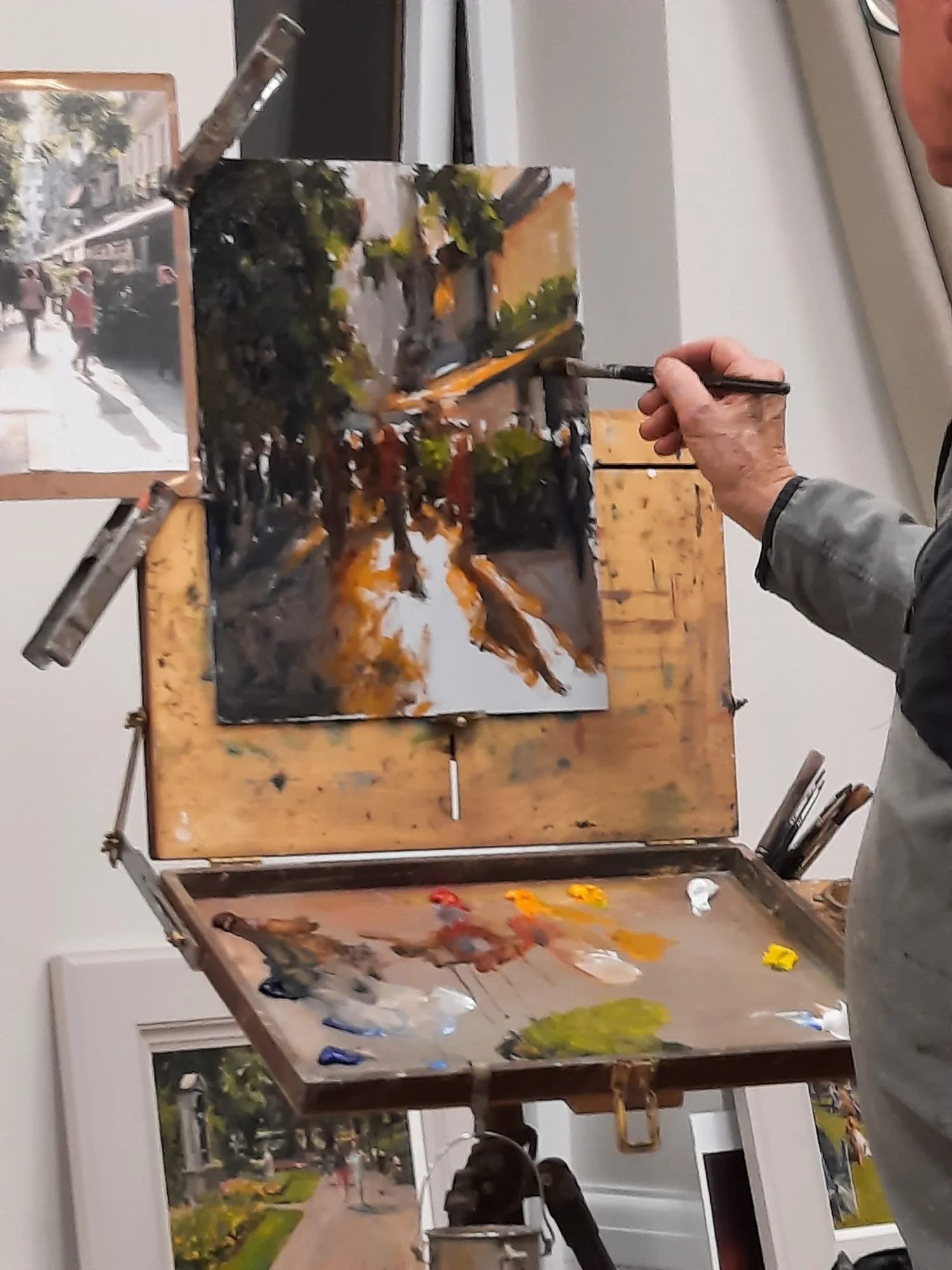
He used burnt Sienna to sketch in the main shapes of the composition. People needed to be placed with their heads at eye level on the notional horizon. Feet would be positioned lower on the painting as they were further forward. It was more important to block in a balanced composition than to copy the reference exactly.
He used a thin mixture of burnt Sienna and ultramarine to paint in the darks and concentrated on the big shapes - it was important not to be distracted by detail at this point. Figures could be suggested, blending into the shadows.
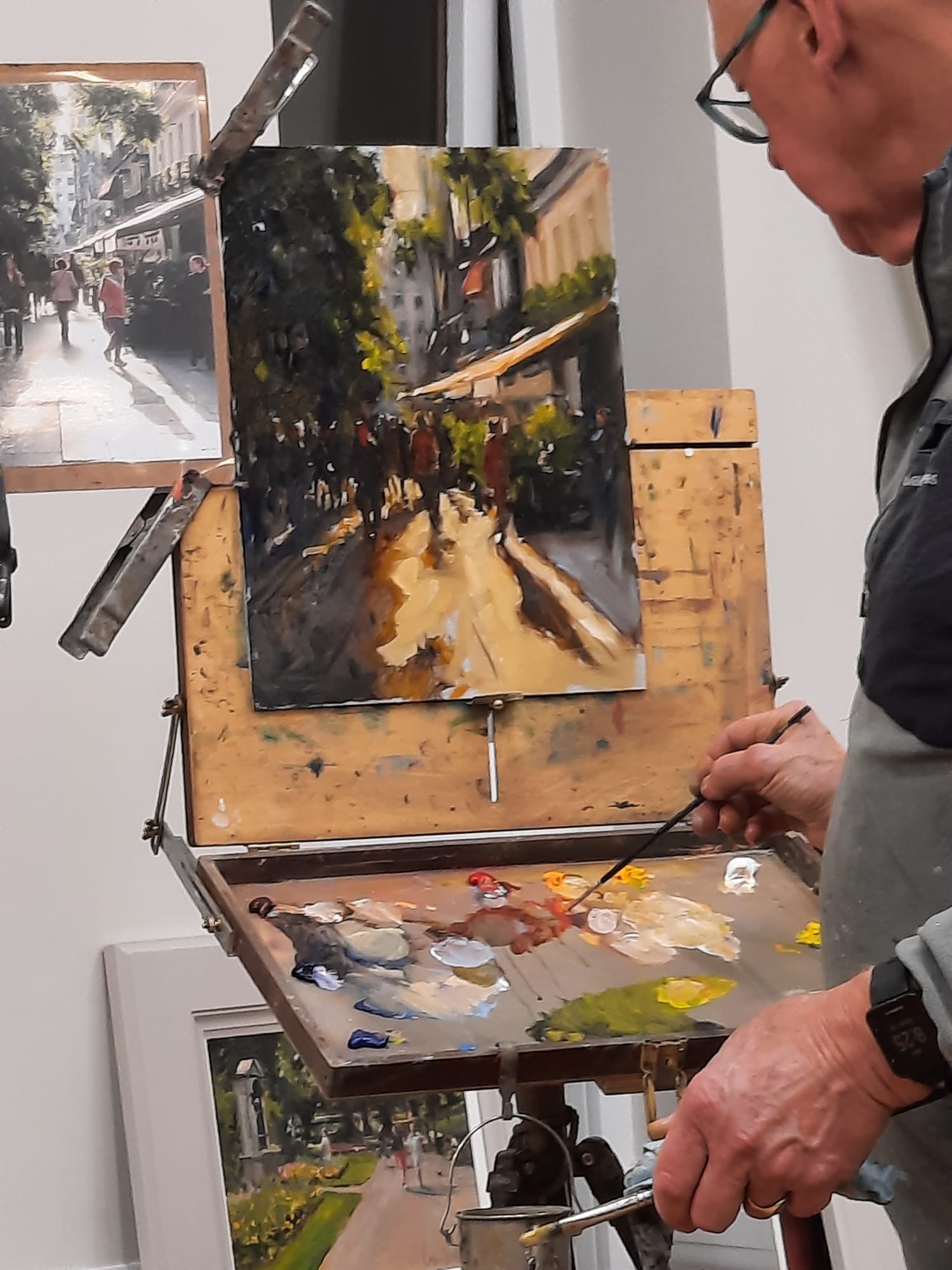
The next stage was to add local colour, thin mid tones, staying aware of the direction of brushstrokes. He mixed a warm grey from burnt Sienna, ultramarine along with cadmium red, cobalt blue and burnt Sienna to give some purple notes. He corrected as he painted, indicating some of the lights but keeping the shadows warm, leaving some burnt Sienna the edges of the darks to allow a transition to cooler lights.
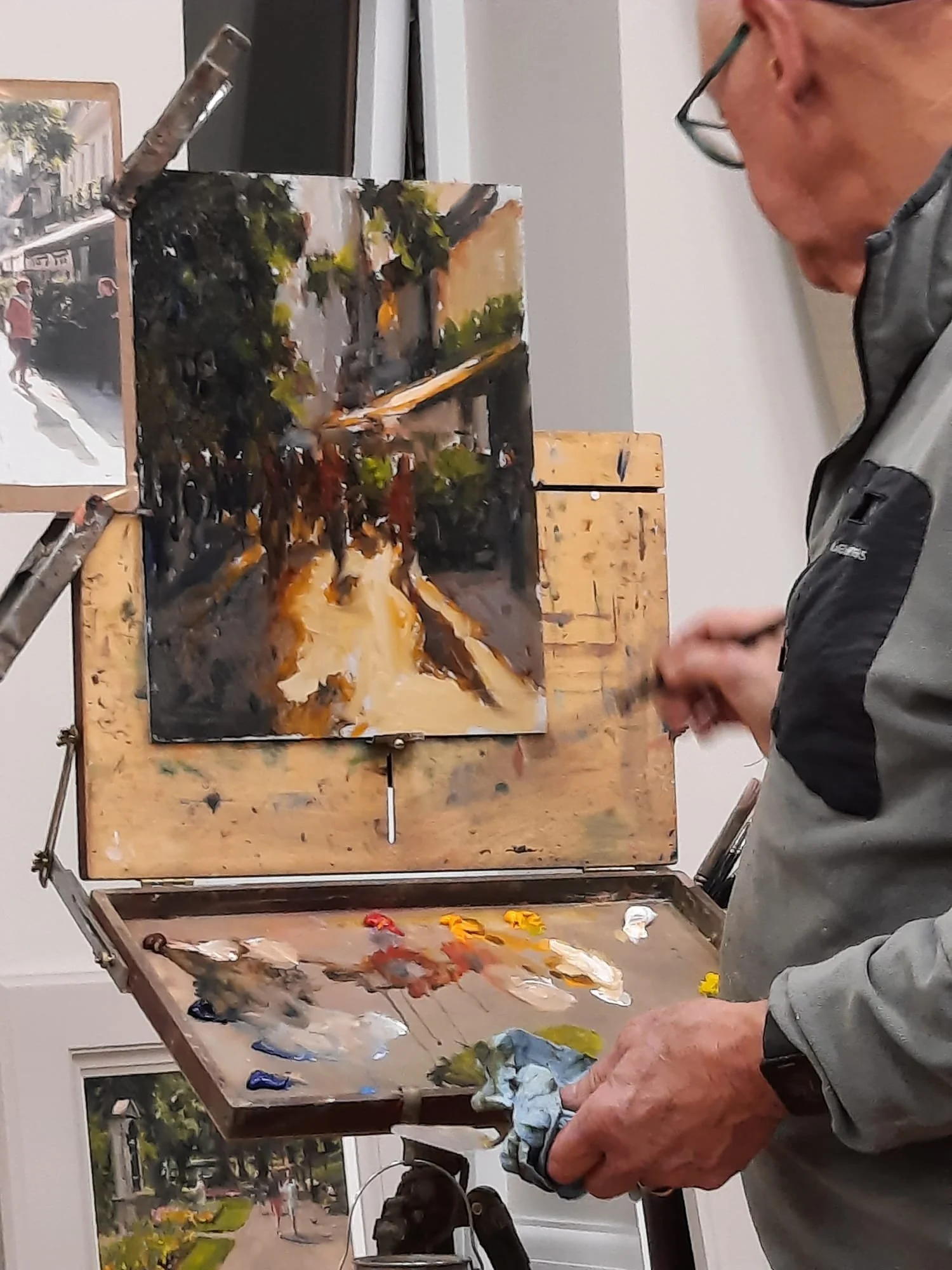
After stepping back to check his composition and perspective, he began to cut into the darks to give the figures and lighter shapes more definition. He changed to a finer brush, using the end of the brush to scrape out some colour..A palette knife was useful to burnish or texture the dark shapes.
At the mid stage, it was time to think about hard/soft edges, colour balance and complimentary colours. Quite often a mirror was useful at the point.
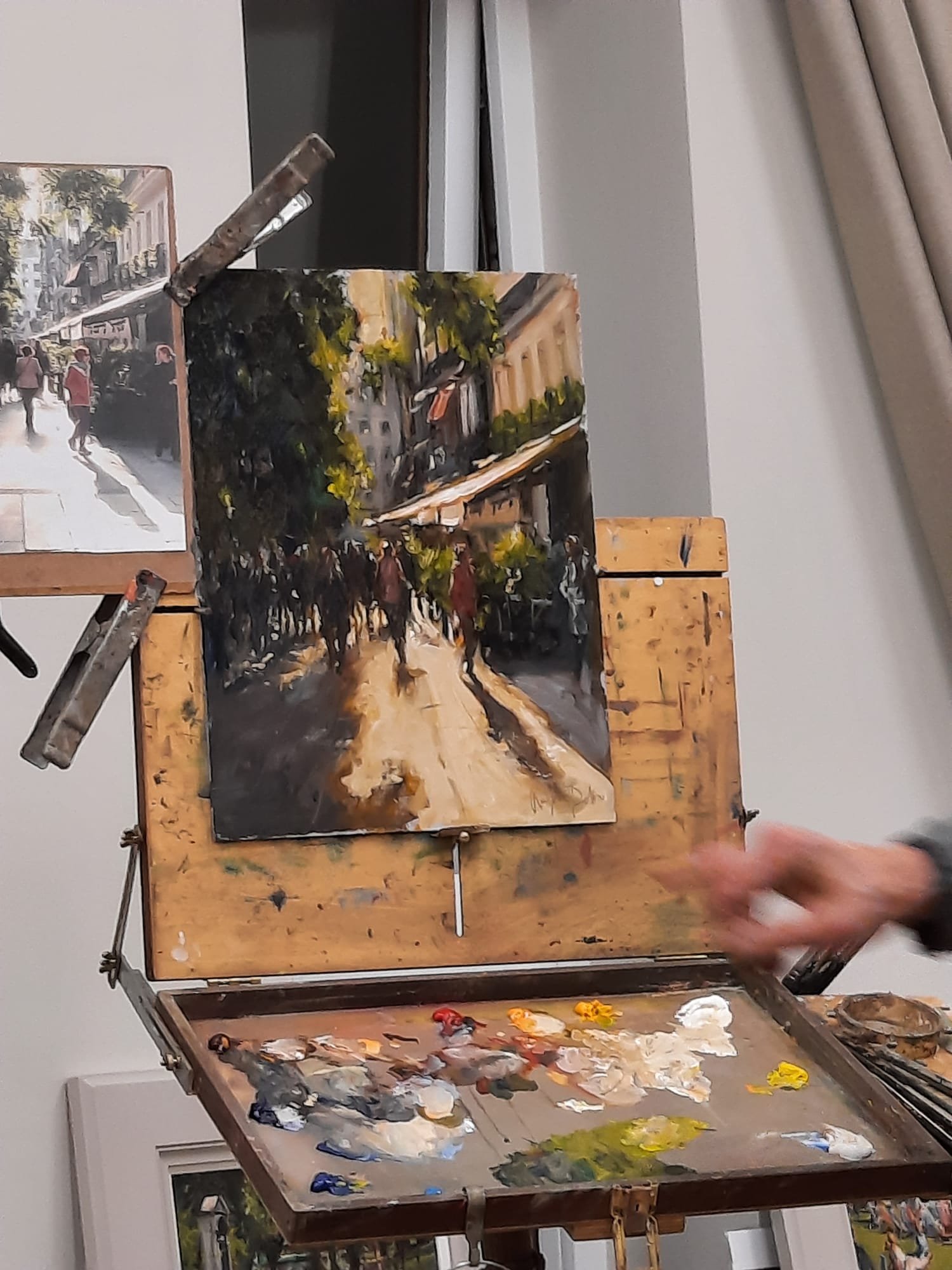
Finally it was time to add the highlights.
he signed his painting with a pencil.
He promised to bring his completed painting to the workshop.
At his workshop, Roger will be working on figures in the urban landscape. Although he worked with oils for this demo, any other media would be welcome, along with a suitable reference picture. Go here to book.